
Dust mites are a problem in many countries, but few have it as persistently as Singapore. Our year-round warmth and humidity sit squarely within the conditions they prefer, which is around 20 to 25°C and relative humidity above 50 percent. They live in mattresses, sofas, carpets and curtains, feeding on dead skin cells, and their waste products are among the most common triggers of allergic rhinitis, eczema and asthma in the region. Most households have them. The question is not whether you can get rid of them entirely, but how much of a dent you can realistically make on your own.
What You Are Dealing With
Dust mites are microscopic arachnids (same family as spiders), approximately 0.2 to 0.3 millimetres in size, invisible without magnification. They do not bite, but their faecal matter contains a protein that is a potent allergen for a significant portion of the population. Symptoms of exposure include sneezing, a runny or congested nose, itchy or watery eyes, skin rashes, and in more serious cases, worsening asthma. According to the National University Hospital, complete elimination of dust mites from a home is not possible, though reducing exposure can meaningfully improve symptoms for allergy sufferers.
In Singapore, the two dominant species are Dermatophagoides spp and Blomia tropicalis, both of which thrive in soft furnishings and are sustained by the dead skin cells humans shed throughout the day. An average person sheds approximately 1.5 grams of skin daily, enough to sustain a large population of mites in a mattress alone.
The Limits of Vacuuming
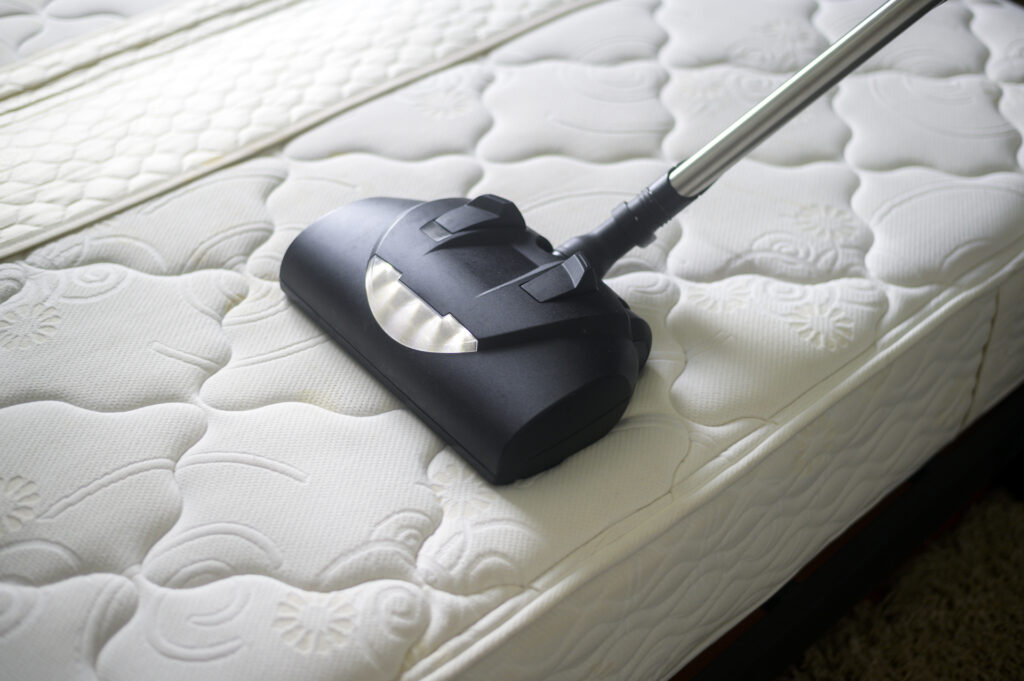
Vacuuming is the most common first response to a dust mite concern. It does help, but only up to a point. Standard vacuum cleaners, including most consumer-grade models, do not have the suction depth to extract mites and their waste from deep within mattress or upholstery fibres. Vacuums without HEPA filtration can scatter fine allergen particles back into the air during use, temporarily worsening the problem.
Even a HEPA-filter vacuum, used correctly and consistently, addresses the surface layer of a mattress or sofa. Dust mites live throughout the depth of the material, and no consumer vacuum is built to reach them at that level. Regular vacuuming is a useful maintenance habit, but as a standalone dust mite treatment, it is insufficient.
The Limits of Hot Washing
Hot washing is one of the most effective DIY methods available. Washing bedding at 60°C or above kills dust mites and removes allergen-laden debris, and doing this weekly makes a measurable difference in allergen load. The limitation, though, is scope. While hot washing works for bedlinen, pillowcases and washable covers, it does not work for the mattress itself, the sofa, carpet or the curtains. These are the surfaces where the majority of a home’s dust mite population resides, and most of them cannot go through a normal washing machine.
Freezing small items for 24 to 48 hours can also kill mites, but like hot washing, it does not address the soft furnishings that make up most of the problem.
Sprays and Home Remedies
Essential oils such as eucalyptus, tea tree and lavender are often cited as natural dust mite repellents, and some studies suggest they may reduce mite populations at high concentrations. In practical application, the concentrations achievable with a DIY spray are considerably lower than those used in clinical research, and the effect on deep-seated mite populations is minimal. Baking soda and white vinegar, used regularly as surface treatments, support general hygiene, but again offer no meaningful penetration into the fibres where mites are concentrated.
Humidity control is one of the more genuinely effective DIY measures. Keeping indoor humidity below 50 percent, through air conditioning or a dehumidifier, makes the environment considerably less hospitable to dust mites and slows reproduction. It does not remove existing populations, but it is a worthwhile ongoing preventive step.
What Professional Cleaning Covers
Professional upholstery and mattress cleaning works differently from anything achievable with consumer equipment in terms of both technique and depth of penetration.
Dustaway’s upholstery cleaning service, which covers mattresses, sofas, carpets, curtains and fabric furniture, uses high-pressure steam treatment to kill mites and break down allergens, followed by deep injection of a specialised cleaning solution into the fabric, extracted alongside dislodged particles using a heavy-duty machine. Large particles are removed from the surface before any equipment makes contact, which protects both the upholstery and the machinery.
The key difference from DIY is penetration. The equipment used in a professional clean is designed to reach several centimetres into mattress and upholstery fibres, where mites and their waste are concentrated, not just the surface layer that a vacuum or spray can address.
DIY vs Professional
| Factor | DIY | Professional |
| Surface Allergen Removal | Partial (with HEPA vacuum) | Thorough |
| Deep Fibre Penetration | Not achievable | Yes, via specialised equipment |
| Dust Mite Elimination | Reduction only | Significant reduction across all layers |
| Scope | Bedlinen only for hot washing | Mattresses, sofas, carpets, curtains |
| Humidity Control | Achievable with AC or dehumidifier | Not applicable (separate measure) |
| Antibacterial Protection | Not available | Can be included in professional treatment |
| Frequency Needed | Weekly (bedlinen), ongoing | Once or twice annually |
| Skill and Equipment Required | Basic | Specialist-trained team with industrial equipment |
Manage It Well With the Right Help
Dust mites cannot be fully eliminated, and that is true regardless of how thoroughly a home is cleaned. What can be achieved, through a combination of consistent household habits and periodic professional treatment, is a meaningful reduction in allergen load and a noticeable improvement in how your home feels to live in. The DIY steps have their place. Nonetheless, they perform considerably better when backed up by the tools and techniques that can reach where the problem sits.
Dustaway’s upholstery cleaning service covers mattresses, sofas, carpets and curtains using high-pressure steam, deep-fibre extraction and injection of a specialised cleaning formula to reduce allergens and protect against regrowth. For households where allergies, asthma or eczema are a concern, a professional session one to two times a year makes a significant difference to day-to-day comfort. In the meantime, between professional sessions, you can bolster these efforts by running a dehumidifier to keep humidity levels down, using allergen-proof bedding, cleaning your home regularly to limit dust and debris build-up, and improving ventilation to reduce the still, humid air that dust mites thrive in.
Check with our team for any ongoing promos. Get in touch with Dustaway to make a booking or find out more.
 Professionalism